
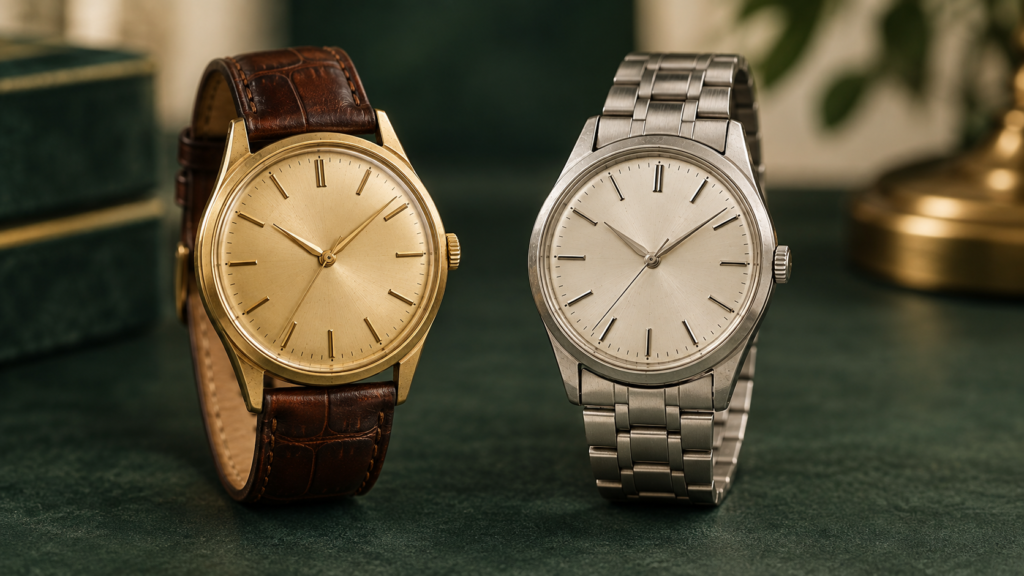
When choosing a vintage watch, the colour and finish can completely change how it looks on your wrist. Two of the most popular choices are gold-tone and stainless-steel watches—but which one is right for you?
Both styles have advantages. Gold-tone watches offer warmth and traditional elegance, while stainless steel has a cooler, versatile appearance. Your choice will depend on your personal style, how often you intend to wear the watch and the condition of the finish.
What Is a Gold-Tone Watch?
A gold-tone watch has the appearance of gold but is not necessarily made from solid gold. Most affordable vintage examples have a thin gold-coloured layer applied over another metal.
Depending on the watch, this may be described as:
- Gold plated
- Gold electroplated
- Gold filled
- Rolled gold
- Gold PVD
- Gold-tone metal
These terms do not all mean the same thing. Gold-filled and rolled-gold cases generally contain a thicker layer of gold than standard gold plating, while PVD is a more modern coating designed to provide a durable and consistent finish.
If a watch is simply described as “gold tone,” you should not assume it contains solid gold. Check the case markings and the seller’s description carefully.
Why Choose a Gold-Tone Watch?
Gold-tone watches have a warm and distinctive appearance. They are especially popular with people who enjoy traditional, dressy or retro designs.
A gold-tone watch can work particularly well with:
- Formal clothing
- Gold jewellery
- Brown or tan leather straps
- Champagne, cream or black dials
- Traditional rectangular and cocktail-style cases
Many vintage ladies’ watches were produced in gold-tone finishes, including elegant bracelet watches and smaller hand-wound models. Gold-tone men’s watches were also extremely popular during the 1960s, 1970s and 1980s.
The finish can make even a relatively affordable watch feel special and luxurious.
Things to Check on a Gold-Tone Watch
The most important consideration is wear to the finish. Over time, the gold-coloured surface may become thinner around the edges, crown, clasp and underside of the case.
This is normal on many genuinely vintage watches, but it is important to inspect the condition before buying.
Look for:
- Fading around the case edges
- Areas where the base metal is showing
- Scratches or marks in the plating
- Discolouration on the case back
- Wear to the bracelet clasp
- Differences in colour between the case and bracelet
Some buyers appreciate this natural ageing because it adds character. Others prefer a cleaner and more even finish. Neither choice is wrong—it comes down to personal preference.
Clear photographs are essential when buying online. At VintageWatches.online, we describe visible signs of age and encourage buyers to examine all the pictures before purchasing.
What Is a Stainless-Steel Watch?
A Stainless steel watch is made using a durable metal alloy designed to resist corrosion and everyday wear. It normally has a cooler, steel-coloured appearance and may have a polished, brushed or mixed finish.
Stainless steel is commonly used for:
- Watch cases
- Case backs
- Bracelets
- Clasps
- Crowns
Some watches have a stainless-steel case back but a plated base-metal case. Therefore, a marking such as “stainless steel back” does not necessarily mean the entire watch is stainless steel.
If you want a completely stainless-steel watch, check the description and case markings carefully.
Why Choose a Stainless-Steel Watch?
Stainless steel is extremely versatile. It works with casual clothing, workwear and formal outfits, making it a practical choice for an everyday watch.
Its main advantages include:
- A timeless appearance
- Good resistance to corrosion
- No coloured plating to wear away
- Easy pairing with different straps
- Suitability for both men’s and ladies’ watches
- A wide choice of vintage and modern designs
Stainless-steel watches can still develop scratches and marks, but these are usually less noticeable than worn plating on a gold-tone case.
A gently aged steel finish can look very attractive, particularly on vintage field watches, divers, chronographs and classic mechanical watches.
Gold-Tone vs Stainless Steel: Which Lasts Longer?
In most cases, stainless steel is the more durable option because its colour is part of the metal itself. A scratch may mark the surface, but it will not normally reveal a differently coloured metal underneath.
A gold-tone finish can last for many years when treated carefully, although its durability depends on the type and thickness of the coating. Friction, moisture, perfume and chemicals can gradually affect the finish.
To help protect a gold-tone watch:
- Keep it away from perfume and cleaning products
- Avoid wearing it during exercise or manual work
- Wipe it gently after use
- Do not use abrasive metal polish
- Store it separately from other jewellery
- Avoid unnecessary contact with water
Vintage watches should generally be kept away from water unless they have been professionally pressure tested and confirmed as water resistant.
Which Colour Is Easier to Wear?
Stainless steel is usually the easiest choice if you want one watch to wear with almost anything. It suits most colours and can be paired with steel jewellery, leather straps or fabric straps.
Gold tone makes more of a statement. It can bring warmth to an outfit and pairs beautifully with gold jewellery and warmer colours such as brown, burgundy, cream, green and navy.
Mixed-metal watches combine gold-tone and steel-coloured sections. These two-tone designs became especially popular during the 1980s and 1990s and are useful if you wear both gold and steel jewellery.
Does Gold Tone Make a Watch More Valuable?
Not necessarily. A gold-tone watch is not automatically worth more than a stainless-steel model.
The value of a vintage watch depends on several factors, including:
- Brand and model
- Age and rarity
- Movement type
- Working condition
- Originality
- Case and dial condition
- Service history
- Buyer demand
A solid-gold watch may have additional value because of its precious-metal content, but a gold-plated or gold-tone watch should not be valued in the same way.
Likewise, some desirable stainless-steel watches are considerably more valuable than similar gold-tone versions. Collectors often favour steel sports watches because they are practical, durable and sometimes harder to find in original condition.
Which Is Better for a First Vintage Watch?
For a first vintage watch, stainless steel is often the most practical choice. It is versatile, durable and generally easier to care for.
However, if you love the warmer appearance of a gold-tone watch, there is no reason not to choose one. A watch should be something you enjoy wearing—not simply the option that seems most practical.
Before purchasing, consider:
- What jewellery you normally wear
- Whether the watch is for daily or occasional use
- How much age-related wear you are comfortable with
- Whether you prefer a subtle or dressier appearance
- The size and condition of the case and bracelet
Common Mistakes to Avoid
One common mistake is assuming that every gold-coloured watch is made from solid gold. Always check for hallmarks and read the description carefully.
Another is assuming that “stainless steel back” means the complete case is stainless steel. It may only refer to the back of the watch.
Avoid judging a vintage watch entirely by its colour. Condition, originality and mechanical operation are equally important. A well-preserved gold-tone watch can be a much better purchase than a badly damaged stainless-steel example—and vice versa.
Final Thoughts
There is no single winner in the gold-tone vs stainless-steel watch debate.
Choose gold tone if you prefer a warm, elegant and traditional appearance. Choose stainless steel if you want something versatile, durable and easy to match with different outfits.
Whichever finish you select, study the photographs, read the condition description and remember that gentle signs of age are part of the character of a genuine vintage watch.
Looking for your next timepiece? Browse the changing collection of pre-owned men’s and ladies’ watches at VintageWatches.online. As most pieces are individually sourced, there is usually only one of each watch available.