
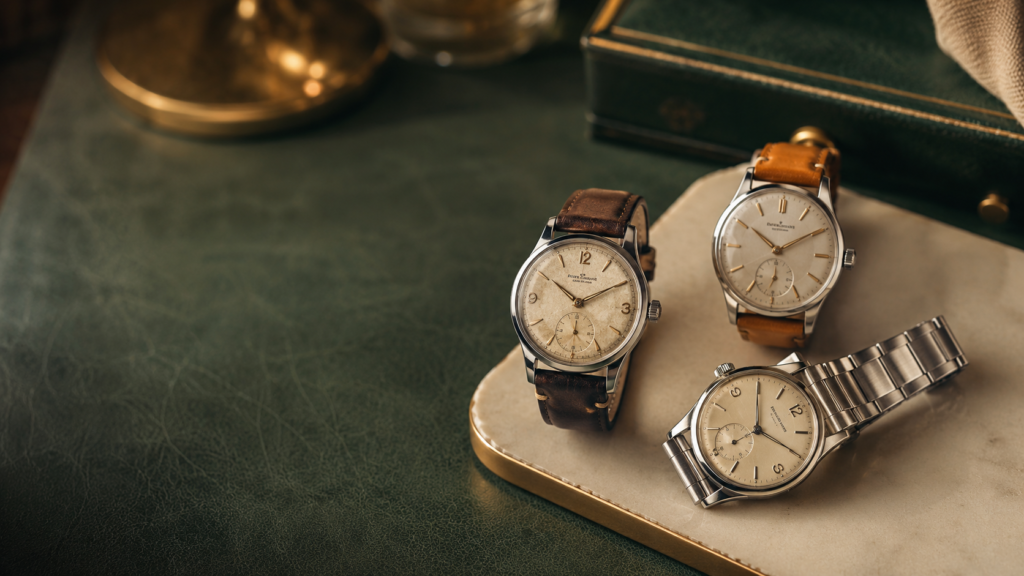
For many years, men’s watches seemed to follow one simple rule: bigger was better.
Large 42mm, 44mm and even 46mm watches became increasingly common, particularly during the 2000s and 2010s. Chunky diving watches, oversized chronographs and heavy steel cases dominated the market.
But watch fashion is changing.
Today, smaller men’s watches are making a noticeable comeback, with classic sizes such as 34mm, 36mm and 38mmbecoming increasingly desirable again.
A Return to Classic Proportions
Historically, men’s watches were considerably smaller than many modern designs.
During much of the 1940s, 1950s, 1960s and 1970s, a case measuring somewhere around 34mm to 38mm was perfectly normal for a gentleman’s wristwatch.
Many vintage dress watches from brands such as Omega, Longines, Tissot, Rotary, Seiko and Citizen were produced in these more restrained sizes.
Rather than looking small, they were designed to sit neatly and proportionately on the wrist.
Today, collectors are beginning to appreciate those proportions again.
Why 36mm Watches Are Becoming Popular Again
One of the most noticeable trends is the renewed popularity of the 36mm men’s watch.
For many wrists, 36mm provides an excellent balance. It is large enough to be easily readable while remaining comfortable, elegant and unobtrusive.
Smaller watches also tend to work particularly well with smarter clothing because they can slide easily beneath a shirt cuff.
They do not need to dominate the wrist to attract attention.
Instead, the appeal often comes from the dial design, craftsmanship, movement and history of the watch.
Vintage Watches Have Helped Drive the Trend
The growing popularity of vintage watches has undoubtedly contributed to the return of smaller case sizes.
Collectors buying watches from the 1950s, 1960s and 1970s quickly discover that watches from these periods are often considerably smaller than modern equivalents.
Once worn, however, many people find that these watches feel surprisingly natural.
A well-proportioned 35mm vintage watch can often appear larger on the wrist than its measurement suggests, particularly when it has a thin bezel and a clean dial.
This has helped change perceptions about what size a men’s watch should be.
Comfort Matters More Than Wrist Presence
Another reason smaller watches are returning is simple: they are comfortable.
Large watches can sometimes feel heavy, particularly when worn throughout the day.
A smaller vintage watch is usually lighter and less intrusive, making it ideal for everyday wear.
For anyone with a smaller wrist, the difference can be even more noticeable.
Instead of the case extending across the entire wrist, a smaller watch sits naturally in the centre.
Celebrities and Collectors Are Wearing Smaller Watches
The trend is no longer limited to dedicated vintage collectors.
Smaller watches have increasingly appeared on the wrists of celebrities, collectors and watch enthusiasts, while manufacturers have also begun introducing new models in more traditional dimensions.
In 2026, 36mm watches in particular have attracted considerable attention within the watch world.
What was once described as a small men’s watch is increasingly being viewed simply as a classic-sized watch.
Does a 34mm Watch Look Too Small on a Man?
Not necessarily.
Watch size is highly personal.
Case diameter is only one measurement. Lug length, dial size, bezel thickness, case shape and wrist circumference all influence how large a watch actually appears when worn.
A 34mm watch with a large dial and narrow bezel, for example, can have considerably more wrist presence than its dimensions suggest.
Vintage watches were also designed around these proportions, meaning the dial, hands, crown and case often work together particularly well.
Smaller Watches Can Be More Versatile
Another advantage of smaller watches is versatility.
A simple vintage 35mm or 36mm watch can look equally appropriate with jeans, business clothing or formal wear.
Because it does not dominate an outfit, it becomes part of the overall look rather than the main feature.
This understated quality is one reason classic watch designs have remained attractive for decades.
What Size Vintage Watch Should You Buy?
There are no strict rules, but as a general guide:
32–34mm: Traditional vintage sizing and particularly suited to smaller wrists or those who prefer a discreet watch.
35–36mm: A classic and increasingly popular size for vintage men’s watches.
37–38mm: A good choice for someone wanting traditional proportions with slightly greater wrist presence.
39–40mm: A useful compromise between vintage sizing and modern dimensions.
Ultimately, the best size is the watch that looks and feels comfortable on your wrist.
Smaller Watches Never Really Went Away
Perhaps the most interesting thing about the current trend is that smaller watches are not really new at all.
They are simply returning to the proportions that defined men’s watches for much of the twentieth century.
For vintage watch enthusiasts, that is excellent news.
Those 34mm, 35mm and 36mm watches that once appeared small beside oversized modern models are increasingly being recognised for what they always were:
comfortable, elegant and timeless watches designed to be worn rather than simply noticed.
At VintageWatches.online, our collection includes a wide range of pre-owned men’s watches from different decades, brands and case sizes. Whether you prefer a compact vintage dress watch or something with a little more wrist presence, choosing the right watch ultimately comes down to proportion, comfort and personal style.