
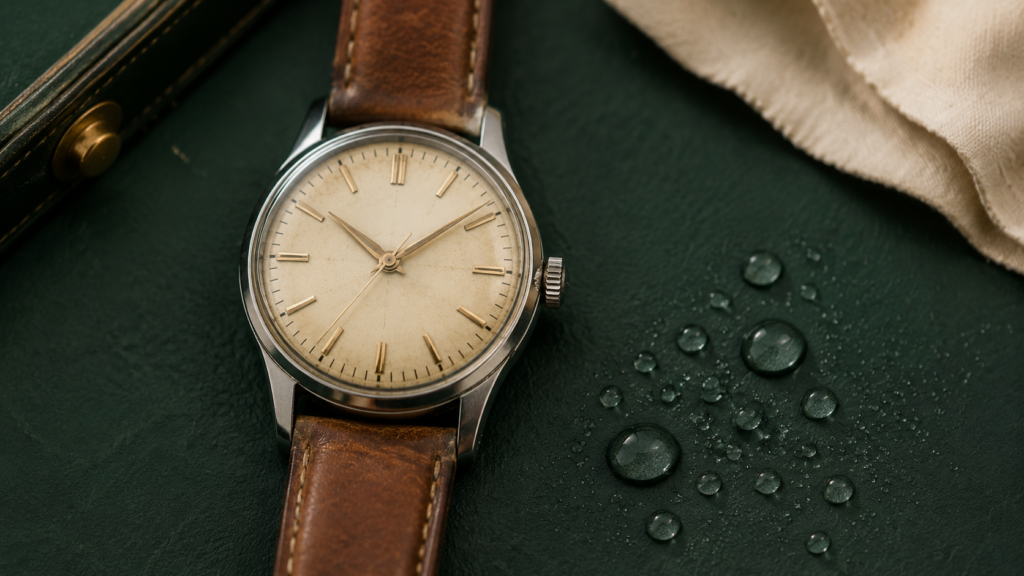
Many vintage watches were originally advertised as waterproof or water-resistant. However, after several decades of use, it is safest to assume that a vintage watch is not waterproof unless it has recently passed a professional pressure test.
Even watches designed for swimming or diving when new may no longer provide the same protection. Rubber seals deteriorate, crowns wear down and tiny gaps can develop around the crystal or case back.
Waterproof vs Water-Resistant
The word “waterproof” was commonly used on older watch dials and case backs. Today, manufacturers generally use the term “water-resistant” because no watch can be guaranteed to remain completely waterproof in every situation.
You may find markings such as:
- Waterproof
- Water-resistant
- 30 metres
- 50 metres
- 100 metres
- Diver’s watch
These markings describe the watch’s original rating. They do not confirm its present condition.
Why Do Vintage Watches Lose Their Water Resistance?
A watch relies on several components to prevent moisture from entering its case. These commonly include rubber gaskets around the case back, crown and crystal.
Over time, these parts can become:
- Dry or brittle
- Flattened or cracked
- Loose or incorrectly fitted
- Damaged during previous repairs
- Worn through everyday use
Older acrylic crystals may also develop tiny cracks that are difficult to see. A worn crown or case tube can create another entry point for water.
Can I Wash My Hands While Wearing a Vintage Watch?
It is better to remove a vintage watch before washing your hands, showering, swimming or doing the washing-up.
Even a small splash can find its way through an ageing seal. Steam and hot water can be particularly troublesome because heat causes the materials inside the watch to expand and contract.
You should also avoid wearing a vintage watch in:
- Heavy rain
- The shower or bath
- Swimming pools
- Hot tubs and saunas
- The sea
- Very humid environments
What Does a Pressure Test Do?
A professional watchmaker can test the case to determine whether it is currently water-resistant. Modern testing equipment checks for changes in the watch case under controlled air pressure, often without placing the watch directly into water.
A watch may need new gaskets, a replacement crown or other repairs before it can pass the test. Even after passing, its water resistance should be checked periodically because seals continue to age.
For valuable or delicate vintage watches, ask an experienced watchmaker whether pressure testing is suitable before proceeding.
What If Moisture Gets Inside?
Condensation or mist beneath the crystal is a warning that moisture has entered the watch. The watch should be examined as soon as possible.
Water can cause:
- Rust on the movement
- Damage to the dial and hands
- Staining beneath the crystal
- Electrical faults in quartz watches
- Deterioration of luminous material
- Permanent loss of originality and value
If you notice condensation, remove the watch and stop operating it. Do not try to dry it with a hairdryer or place it on a radiator, as excessive heat may cause further damage. Take it to a watchmaker promptly.
Are Vintage Diver’s Watches Safe in Water?
A vintage diver’s watch may have been highly water-resistant when it was manufactured, but its age means that the original rating cannot be trusted automatically.
Collectors often keep vintage diving watches away from water to preserve their original dials, hands and cases. If you need a watch for regular swimming or diving, a modern water-resistant watch is usually the safer choice.
How to Protect Your Vintage Watch
A few simple precautions can help prevent expensive water damage:
- Keep the watch away from water unless it has been professionally tested.
- Remove it before washing, bathing or swimming.
- Never operate the crown or pushers when the watch is wet.
- Have damaged crystals and loose crowns inspected.
- Store the watch somewhere dry and away from sudden temperature changes.
- Arrange a professional inspection if you see condensation.
Final Thoughts
So, are vintage watches waterproof? The safest answer is no—not unless the individual watch has recently been inspected and pressure-tested by a qualified watchmaker.
An old waterproof marking describes what the watch could withstand when it was new, not what it can withstand today. Treating a vintage watch as a delicate piece of history is the best way to protect its movement, appearance and value for years to come.
Explore our collection of carefully selected pre-owned watches at VintageWatches.online, with free worldwide tracked shipping.