
How to Store a Vintage Watch Properly
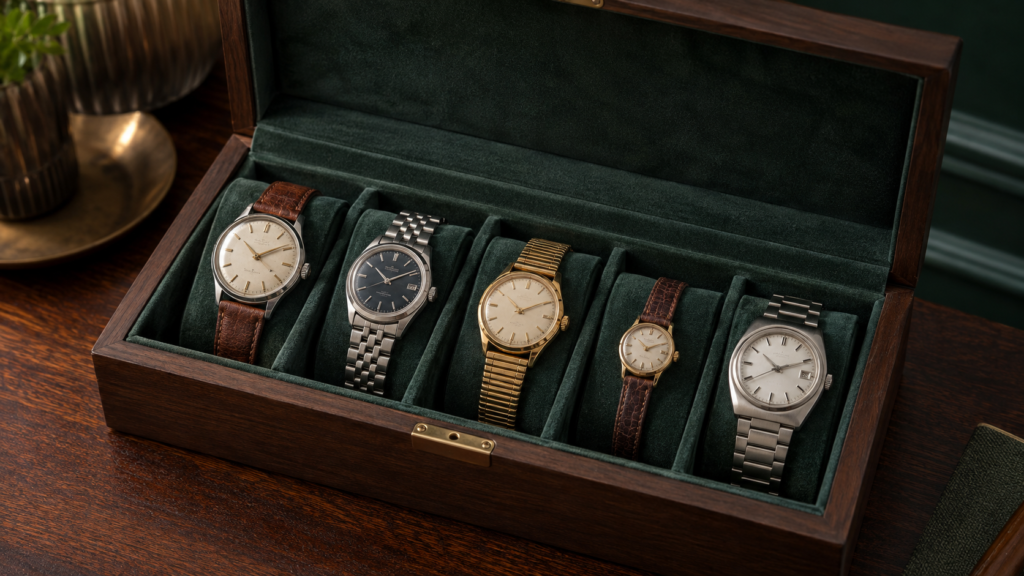
Vintage watches deserve careful storage. Whether you own one treasured timepiece or a growing collection, the way you store your watches can affect their condition, appearance and reliability.
Moisture, dust, direct sunlight and accidental knocks can all cause unnecessary damage. Fortunately, keeping a vintage watch protected does not require expensive equipment. A few sensible precautions can help preserve it for many years.
Clean the Watch Before Storing It
Before putting your watch away, gently wipe the case, crystal and bracelet with a clean, soft microfibre cloth. This removes fingerprints, perspiration and everyday dirt that could mark the surfaces over time.
If the watch has a leather strap, make sure it is completely dry before storage. Moisture trapped against leather can cause staining, stiffness and unpleasant odours.
Never soak a vintage watch unless its water resistance has recently been professionally tested. Even watches marked as water-resistant may no longer provide their original level of protection because seals deteriorate with age.
Keep It Somewhere Dry
Moisture is one of the greatest threats to a vintage watch. It can cause rust, dial deterioration, stained hands and damage to the movement.
Choose a dry room with a reasonably stable temperature. Avoid bathrooms, kitchens, garages, lofts and damp cellars, as these places often experience changes in temperature and humidity.
A small silica-gel packet may be placed inside the storage box to help control moisture. Keep it beside the watch rather than directly against the case, dial or strap.
Use a Proper Watch Box
A padded watch box is one of the safest storage choices. It protects the watch from dust, knocks and scratches while keeping it neatly supported.
Make sure each watch has its own compartment and that neighbouring cases, bracelets and crowns cannot touch. Metal bracelets can easily scratch polished cases and crystals.
If you do not have a watch box, place the watch inside a clean, soft pouch. Avoid wrapping it in rough fabric, paper towels or materials that could trap moisture.
Avoid Direct Sunlight and Heat
Long exposure to sunlight can fade a vintage dial, alter its colour and damage a leather strap. Strong heat may also dry out lubricants and affect seals inside the case.
Do not store watches on a sunny windowsill, above a radiator or close to another heat source. A drawer, cupboard or closed watch box in a normally heated room is usually a much safer option.
Keep Watches Away From Magnets
Mechanical watches can become magnetised when placed close to strong magnetic fields. This may cause the watch to run unusually fast, slow or erratically.
Keep vintage watches away from powerful speakers, magnetic clasps, tablets, laptops and other magnetic accessories. Normal household exposure is not always harmful, but avoiding prolonged close contact is sensible.
Do Not Store a Watch With the Crown Pulled Out
Some owners pull out the crown of a quartz watch in an attempt to save battery power. This is not recommended for long-term storage because it can leave the mechanism vulnerable to dust and moisture.
If a quartz watch will remain unused for a long period, consider having the battery professionally removed. An old or exhausted battery can eventually leak and damage the movement.
Take Care With Leather Straps
Leather straps should be stored flat or gently curved without sharp bends. Fastening one too tightly around a small cushion can cause the leather to crack or develop permanent creases.
Keep leather away from damp conditions, strong sunlight and direct heat. Avoid applying ordinary household oils or cleaning products, as these may stain the strap or damage its finish.
Should a Mechanical Watch Be Kept Running?
A mechanical watch does not need to run continuously while it is being stored. Allowing it to stop will not normally harm it.
If you occasionally wear the watch, wind it carefully according to its normal operating instructions. Never force the crown once resistance is felt.
A watch winder is generally unnecessary for a hand-wound vintage watch. It may be useful for certain modern automatic watches, but constant operation can place additional wear on an older movement.
Check Stored Watches Regularly
Inspect your stored watches every few months. Look for signs of condensation, corrosion, battery leakage, strap deterioration or unexpected changes in appearance.
If you see moisture beneath the crystal, have the watch examined promptly. Internal condensation should never be ignored because rust can develop quickly.
Keep Boxes and Paperwork Together
Original boxes, receipts, service records and instruction booklets can add to the history and desirability of a vintage watch. Store paperwork separately in a dry protective folder so it does not rub against the watch.
Keeping a record of battery replacements, repairs and servicing can also be useful for both future maintenance and resale.
Final Thoughts
The best place to store a vintage watch is somewhere clean, dry, shaded and protected from sudden temperature changes. A lined watch box, gentle cleaning and regular checks will prevent many common storage problems.
Vintage watches were made to be enjoyed, but careful storage between wears will help protect their character, condition and history for the next generation.
Looking for your first vintage watch? Browse our Men’s Watches collection.
Explore our Ladies’ Vintage Watches collection.